MLB star Curt Flood is rebuked by the courts for a second time after challenging baseball’s Reserve Clause and fighting for free agency in baseball
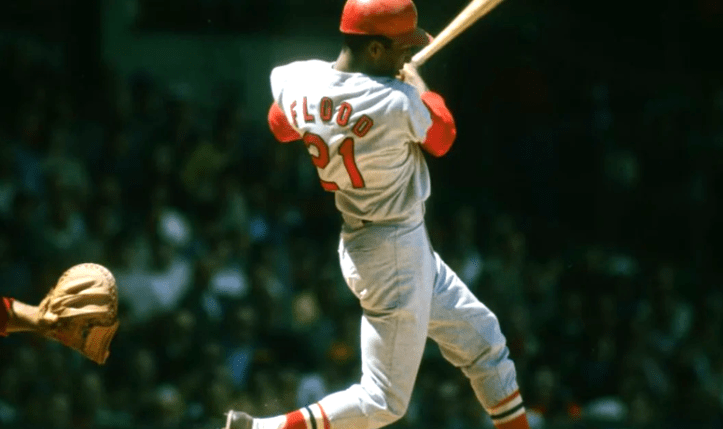
On April 7, 1969, Curt Flood, a standout outfielder for the St. Louis Cardinals, refused a trade and challenged baseball’s reserve clause. By doing so, he challenged a system that tied players to teams indefinitely, without allowing for freedom of movement.
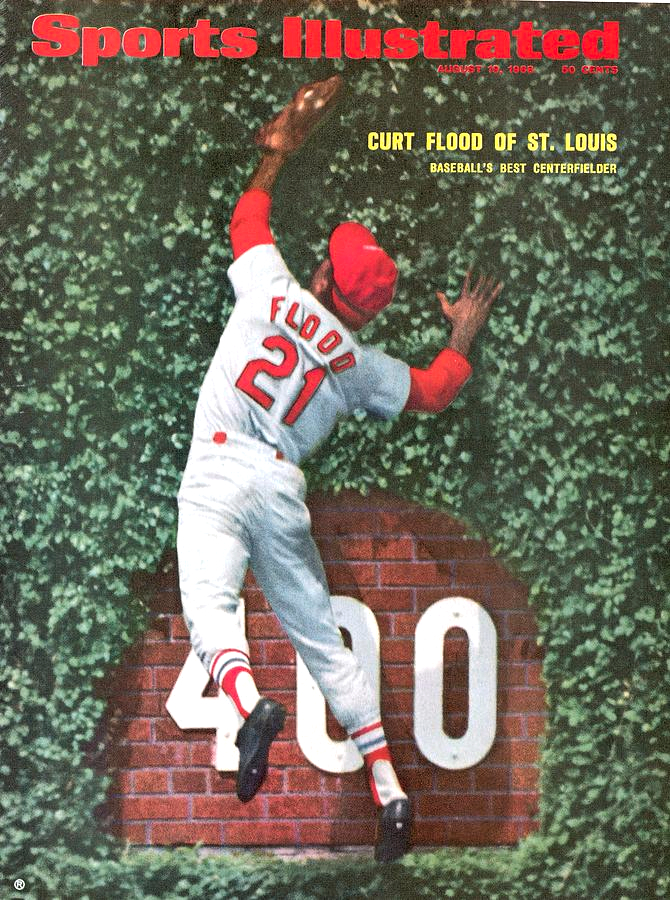
When he sued Major League Baseball, Flood wasn’t seen as a hero. Many considered him a troublemaker, challenging a tradition almost as old as the game.
In 1971, the U.S. Court of Appeals upheld the dismissal of Flood’s case. On the surface, Flood lost. His career faded. The reserve clause remained in place—temporarily. During this period, he was bombarded with hate mail from fans, who accused him of trying to destroy baseball; his teammate, Hall of Fame pitcher Bob Gibson, stated, “He got about four or five death threats a day.”
But history has a way of reframing itself.
However, the image of him today is quite different. He is widely recognized for ‘taking the bullet’ — putting his career on the line to argue for fair pay and free agency.
Flood’s stand became the catalyst for change. Within a few years, other players followed his lead, and by 1975, the reserve clause was effectively dismantled, paving the way for modern free agency.
Today, Flood is no longer seen as a troublemaker. He’s remembered as a pioneer—a man who sacrificed his career so that future generations could have freedom. Flood’s legacy isn’t in the games he won, but in the rights players gained. Each contract signed in freedom bears its unique imprint.
In his 15-year career playing for Cincinnati, St. Louis, and Washington, Flood was one of the very best defensive players in baseball, winning seven Gold Glove Awards in center field. He won two World Series (164 & 1967) while with the Cardinals and was a three-time NL All-Star.
Curt Flood died on January 20, 1997. He was just 59 years old at the time of his passing.
 The Sidearmer