From the Golden Age until today, everyone can recall the fondest time of their fandom
By Ryan K Boman | April 4, 2026

With the passing of time, nearly every fan of anything begins to become nostalgic about the things they love the older they get. All of us will remember a time when it seemed like ‘everything was better’, and we were lost in both imagination and innocence.
The professional wrestling audience is no different. Much like music and other forms of entertainment that always have a longing to go back to the ‘good old days’, even if we’re not always sure which days those were. Followers of grappling are particularly known for their nostalgic ways, as they routinely watch clips of old matches, honor the industry’s past, and listen to shoot interviews conducted with the guys they grew up seeing as flickering images on a television screen.
This phenomenon occurs for every era and accommodates any age range. And even though the names, faces, and places may have changed over time, the visceral reaction of the viewers never did. Children of the 1950s were just as excited to cheer on Lou Thesz as teenagers in the late 90s were for The Rock. There’s this suspension of disbelief and reprieve from reality that comes when our emotions are energized in that way.
Nostalgia, as powerful as it is, can also be misleading
The “best” year in professional wrestling isn’t always the one we remember most fondly—it’s the one that holds up when stripped of time and personal bias. Or at least, that’s how we try to define it.
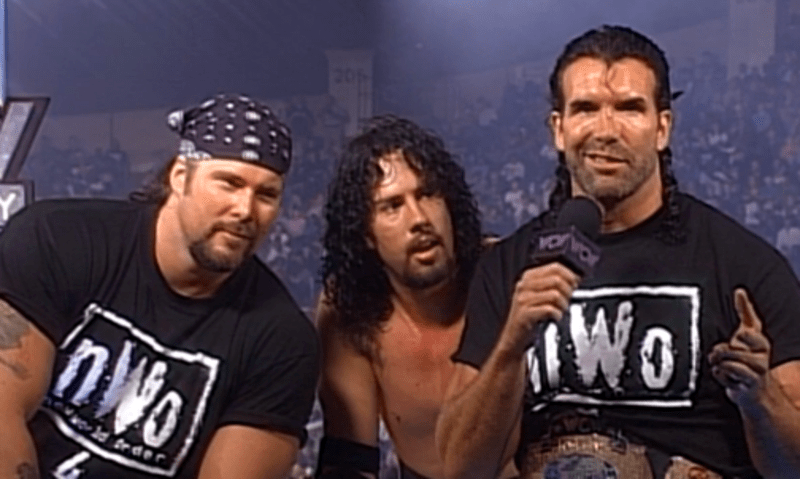
My personal favorite is 1997 – it had the nWo riding high in WCW and Vince McMahon slowly embracing the switch to ‘The Attitude Era’. I remember going to frat houses and seeing college guys having Monday Night watch parties. Suddenly, wrestling was ‘cool’, after it had spent years being a punchline for all the cool kids.
It wasn’t just what was happening in the ring—it was what was happening around it. I remember walking into frat houses on Monday nights and seeing rooms full of college students, all glued to the television. Wrestling, for the first time in years, wasn’t something you kept to yourself—it was something you shared. It was loud, it was communal, and it was cool.
On one side, the New World Order had taken over WCW, blurring the lines between storyline and reality in a way that felt genuinely unpredictable. Led by a reinvented ‘Hollywood’ Hulk Hogan, the faction didn’t just dominate—they disrupted. It felt less like a scripted show and more like a live episode of COPS.
At the same time, the then-WWF was undergoing a transformation of its own. The colorful, cartoonish characters and childish storylines that had become the organization’s trademark were no longer landing with the younger demographic. The 90s grunge era was way edgier than that, so McMahon began evolving into way to something sharper, more grounded.
Stone Cold Steve Austin was rising, not as a traditional hero, but as something far more complex—defiant, unpredictable, and undeniably real. Meanwhile, Bret Hart was evolving into a character layered with frustration and moral ambiguity, reflecting a world where clear lines between right and wrong were beginning to fade.
Wrestling in 1997 didn’t just entertain—it shifted. The stories felt less like fantasy and more like reflections of the culture surrounding them. The crowd wasn’t just reacting anymore; it was participating, fueling the energy, becoming part of the spectacle itself.
Declaring any single year as the ‘best’ is totally subjective
Time has a way of softening the edges, of turning missed spots into masterpieces and flawed storylines into cherished memories. We view the most captivating times in our lives through our own personal set of rose-colored glasses—even if it wasn’t always as perfect as we may remember.
Whether you grew up rooting for Jack Brisco in the 70s or Stone Cold Steve Austin 20 years later, we view the most captivating times in our lives through our own personal set of rose-colored glasses… with a childlike innocence that we never truly escape. Even if it wasn’t always as perfect as we may remember.
And maybe that’s the point. The magic of professional wrestling has never lived in any one year, but in the way it meets us at just the right moment—and stays with us long after the final bell.
 The Sidearmer