Two decades ago, the sports world became captivated by the promise of potential, but things didn’t go quite as planned for golfer Michelle Wie or soccer star Freddy Adu

By Ryan K Boman | April 3, 2026

With the news that former golf prodigy Michelle Wie is coming out of retirement to compete in this year’s US Open event, it was a blast from the past for many fans of the sport. In the early 2000s, the then-teenager stunned the world by not only competing against women her own age, but also with special exemptions in some men’s events. She was viewed by many observers as the ‘female Tiger Woods’, a young player who would ignite a whole new fan base.
There will likely be several sets of eyes that tune into the June telecast, just to take a look back at what might have been.

Around the same time as Wie’s emergence in the sporting world, another adolescent phenom, Freddy Adu, was just as promising a star in soccer. Heaped with huge expectations from the time he was just 14, the Ghanian-American player was set to become futbol’s new age version of the legendary Pelé — or so we all thought at the time.
Two decades ago, the sports world became captivated by the promise of this pair of prodigies. Michelle Wie emerged as a teenage sensation with a powerful swing, along with the charm and good looks to become a favorite of Madison Avenue. In the world of soccer, Freddy Adu was heralded as the American answer to global icons, and he was carrying the weight of expectation rarely placed on someone so young.
Wie’s rise felt almost cinematic. At just 10 years old, she qualified for the U.S. Women’s Amateur Public Links Championship, and by her mid-teens, she was not just competing but contending in professional events. Sponsors lined up, media attention surged, and her decision to test herself against male competitors only added to her mystique.
Yet, her journey proved more problematic than prophecy. Injuries, particularly chronic wrist issues, disrupted her momentum, and the grind began to wear on her. Still, Wie carved out a respectable career, highlighted by her victory at the 2014 U.S. Women’s Open—a moment that validated years of perseverance, even if it fell short of the generational dominance once predicted.
Adu’s story unfolded much differently. He became a symbol of American soccer’s potential breakthrough into more mainstream exposure. Early flashes of brilliance with D.C. United hinted at greatness, but his development stalled amid frequent transfers across leagues and continents.
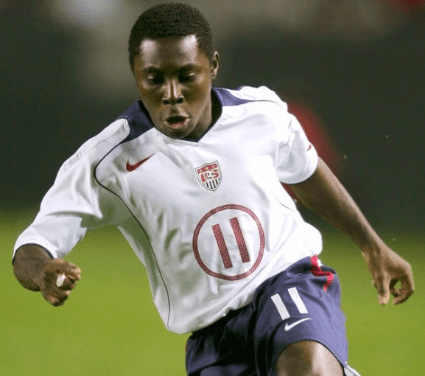
Unlike Wie, who eventually secured a defining major title, Adu never found a stable foothold at the highest levels of the sport. His career became a journey rather than a destination—marked by glimpses of what could have been rather than sustained excellence.
The parallel between Wie and Adu lies not in failure, but in the burden of expectation. Both were marketed as saviors of their sports, asked to transcend not just competition but history. That weight can distort development, turning growth into scrutiny and potential into pressure.
While neither fully reshaped their respective games, their stories offer a more nuanced truth: prodigy is not a guarantee of dominance, but a starting point—one that still requires time, health, and circumstance to fulfill.
In the end, Michelle Wie and Freddy Adu remind us that even extraordinary beginnings do not ensure legendary endings. Yet within their careers lies something equally compelling: resilience, adaptation, and the enduring complexity of what it means to be “the next big thing.”
 The Sidearmer